How Professional Painters Prepare a Home Before Painting
A quality paint job starts before the first finish coat. See what professional surface preparation can involve and why it matters.
The most visible part of a painting project is the new color.
Some of the most important work, however, happens before the finish coat is applied.
Preparation helps create a cleaner appearance, improves adhesion, and addresses defects that would otherwise remain visible underneath new paint.
The exact process varies from project to project, but here is what professional preparation can involve.
Protecting the Surrounding Area
Before surface preparation begins, areas that aren't being painted need protection.
For an interior project, that may include:
- Floors
- Furniture
- Fixtures
- Hardware
- Countertops
- Adjacent surfaces
Exterior protection may involve landscaping, walkways, windows, fixtures, roofing surfaces, and other nearby materials.
Cleaning the Surface
Paint adheres best to an appropriately clean surface.
Interior walls can accumulate dust, fingerprints, grease, and other residue.
Exterior surfaces may have dirt, pollen, mildew, chalking, and environmental buildup.
The appropriate cleaning method depends on the surface and its condition.
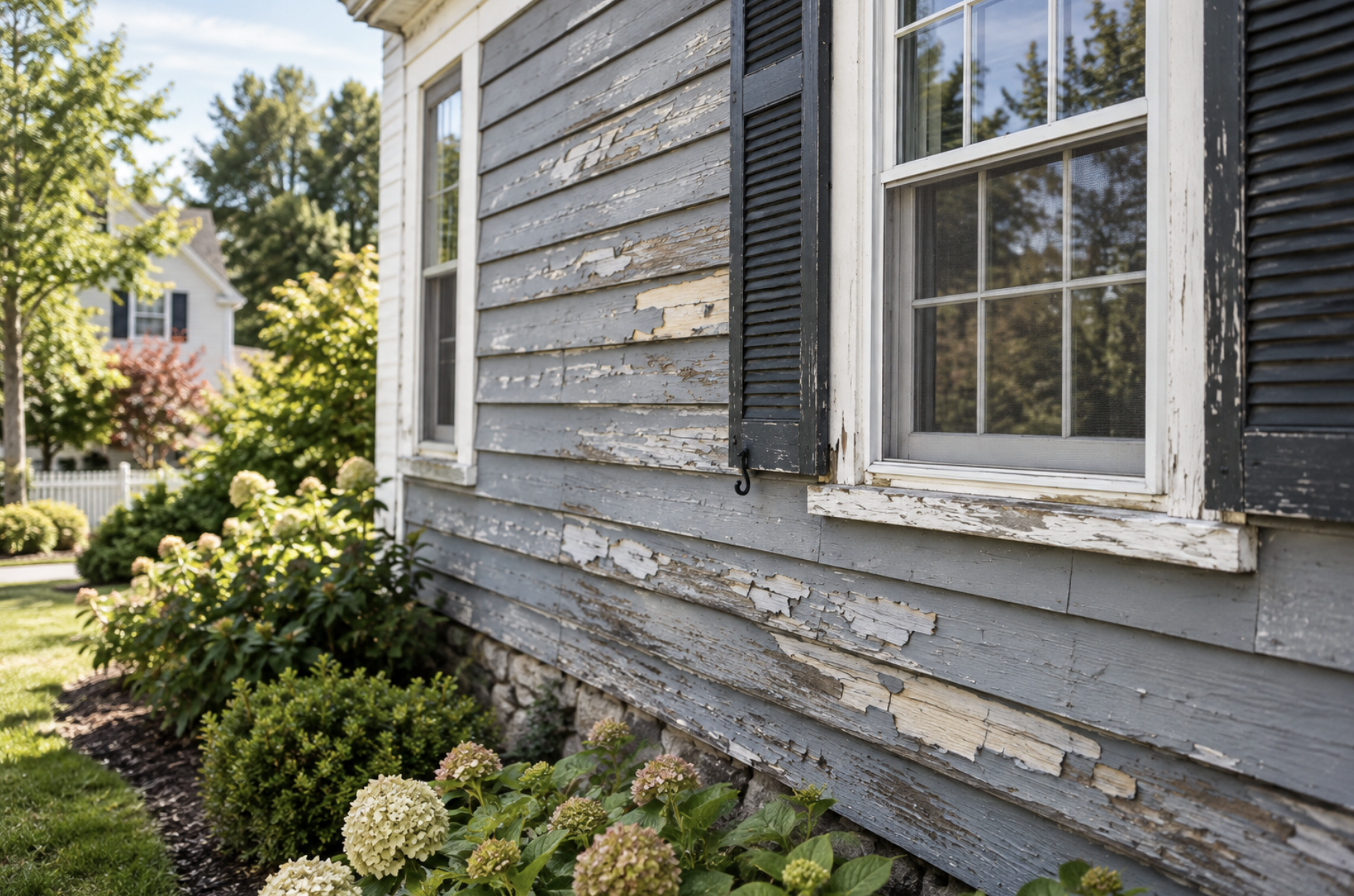
Removing Loose Paint
New paint should not simply be applied over material that is already peeling or poorly adhered.
Loose or failing paint may need to be scraped or otherwise removed as part of preparation.
The objective is to create a sound surface for the new coating system.
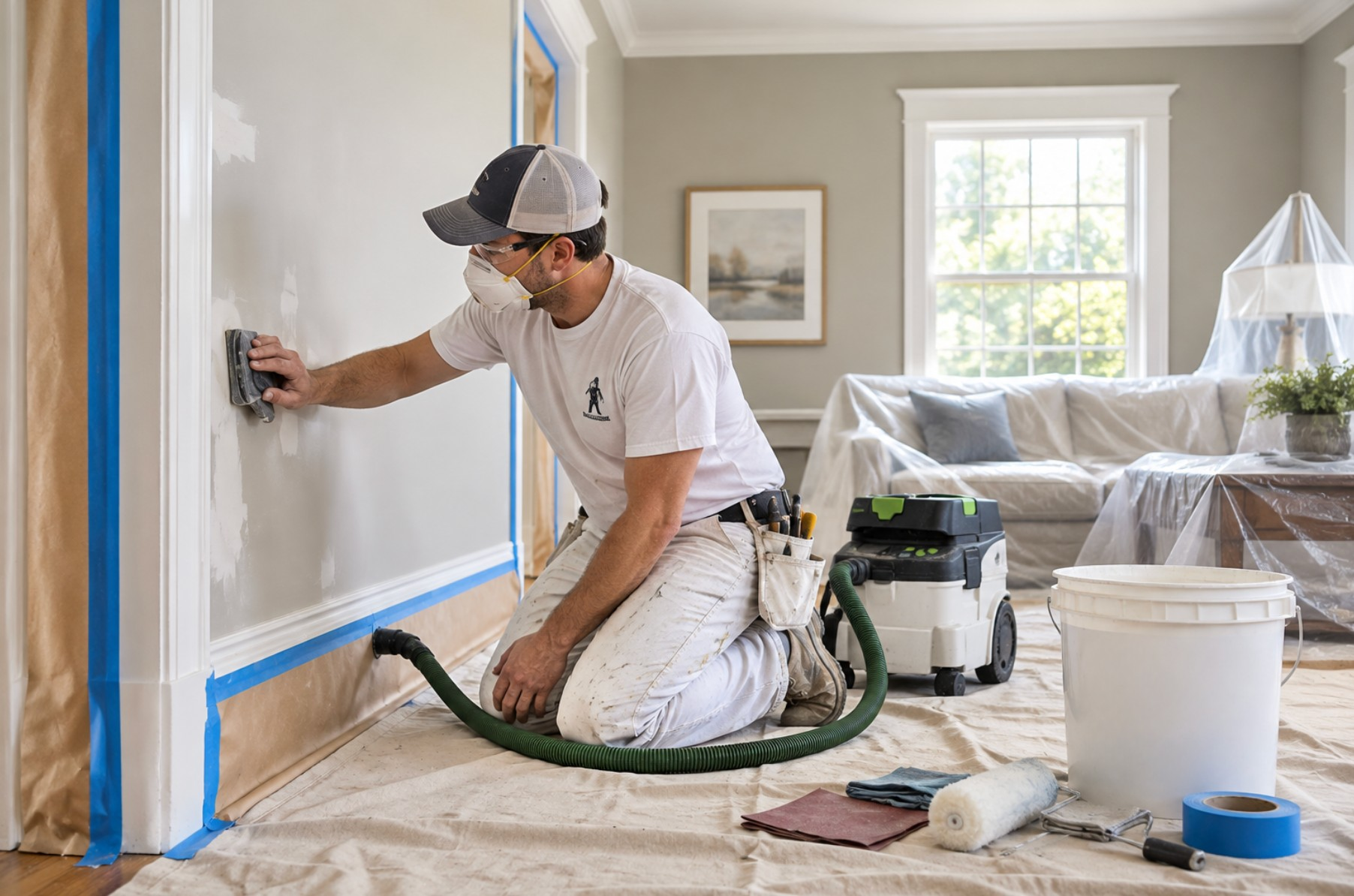
Sanding
Sanding can serve several purposes.
Depending on the project, it may:
- Smooth repaired areas
- Feather edges around existing paint
- Reduce surface imperfections
- Prepare glossy surfaces
- Improve the overall finish
The amount of sanding required varies considerably by surface.
Patching and Minor Surface Repairs
Fresh paint can make existing wall defects more noticeable rather than hiding them.
Before interior painting, preparation may include addressing:
- Nail holes
- Small dents
- Minor cracks
- Previous patching
- Surface imperfections
Larger damage or structural issues may require work outside the normal scope of painting.
Caulking
Caulk can help create clean transitions and address appropriate gaps around trim or joints.
Exterior caulking may also play a role in weather protection depending on the construction detail.
Not every gap should automatically be caulked, so the application should suit the surface and building assembly.
Priming
Primer isn't simply an automatic extra coat.
It serves specific purposes.
Depending on the project, primer may be used on:
- Bare substrates
- Repairs
- Significant color changes
- Certain stains
- Surfaces requiring improved adhesion
- Materials requiring a compatible base coat
The primer should be selected for the substrate and coating system.
Stain Blocking
Some stains can migrate through ordinary paint.
When appropriate, a stain-blocking primer may be required before finish coats are applied.
The underlying source of a stain—particularly moisture—should also be understood rather than simply hidden.
Masking
Clean lines require careful control of where coatings are applied.
Masking may involve tape, paper, plastic, or other protective materials depending on the project.
Good masking is particularly important around detailed trim, cabinetry, fixtures, and adjacent finishes.
Removing Dust Before Painting
Sanding and repairs can create dust.
Before applying coatings, surfaces should be prepared according to the product requirements so debris does not become trapped in the finish or interfere with adhesion.
Interior and Exterior Prep Are Different
Interior projects often focus heavily on protecting occupied spaces, repairing walls, preparing trim, and controlling dust.
Exterior preparation must also account for weather, moisture, existing coating failure, exposed materials, and environmental conditions.
There isn't one preparation checklist that applies identically to every project.
Why Preparation Matters
A fresh color can look impressive immediately after application.
The quality of the preparation underneath it influences how clean the finished surfaces look and how well the coating can perform.
That is why a professional painting project should be evaluated as a complete process rather than simply the number of finish coats applied.
Planning a Painting Project?
Minute Men Painters can evaluate your surfaces and determine what preparation is appropriate before interior painting or exterior painting begins.
Planning a Painting Project?
Tell us about your painting project and request a free, no-obligation estimate.