How to Choose Exterior Paint Colors for a New England Home
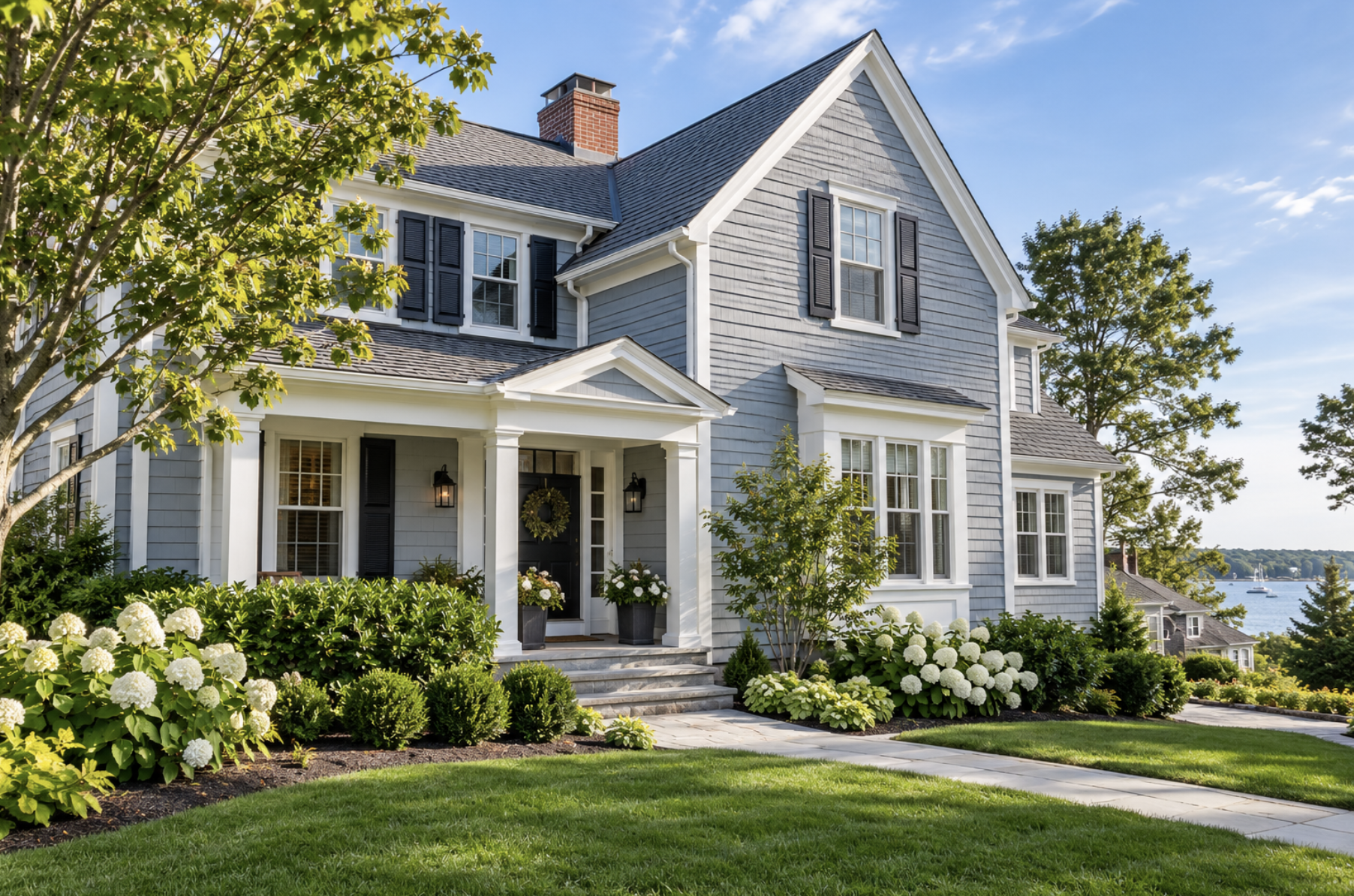
Choose an exterior palette that complements your home's architecture, roof, masonry, landscape, and New England surroundings.
Choosing an exterior paint color can feel more intimidating than selecting an interior color.
Inside, you can change furniture, rugs, and decor relatively easily. Outside, your paint needs to work with permanent features such as the roof, masonry, architecture, and surrounding landscape.
For New England homes, those relationships are especially important.
Start With the Architecture
Your home's architectural style is a useful starting point.
New England includes everything from traditional Colonials and Capes to coastal cottages and contemporary homes.
You don't necessarily have to choose a historically traditional color, but the architecture can help determine which combinations feel natural.
Consider the relationship between:
- Main siding
- Trim
- Doors
- Shutters
- Porches
- Architectural details
Look at the Roof
The roof is one of the largest permanent color elements on most homes.
A siding color should work with the roof rather than being selected independently.
Consider whether the roofing reads as:
- Warm
- Cool
- Neutral
- Highly varied
- Visually dominant
This can quickly eliminate colors that clash with the existing structure.
Consider Stone and Brick
Masonry contains undertones that can influence the entire palette.
Brick may include reds, browns, creams, grays, or other tones.
Natural stone can be even more varied.
Because these elements are unlikely to change during a normal painting project, treat them as part of the color scheme from the beginning.
Use the Surroundings
New England homes often sit among mature trees, coastal landscapes, traditional neighborhoods, or wooded lots.
A color doesn't have to disappear into its surroundings, but considering the setting can help create a more cohesive result.
Coastal Doesn't Have to Mean Blue
Blue and gray are popular choices for coastal homes, but they aren't the only options.
Warm whites, muted greens, understated neutrals, and other restrained colors can work beautifully depending on the architecture and permanent finishes.
The goal should be a palette that suits the actual home rather than simply following a theme.
Build a Complete Palette
Think beyond the siding color.
A typical exterior palette may include:
- Main body color
- Trim color
- Front door or accent color
- Shutter color where applicable
The relationship between those colors often matters more than any one selection by itself.
Test Colors on the Actual House
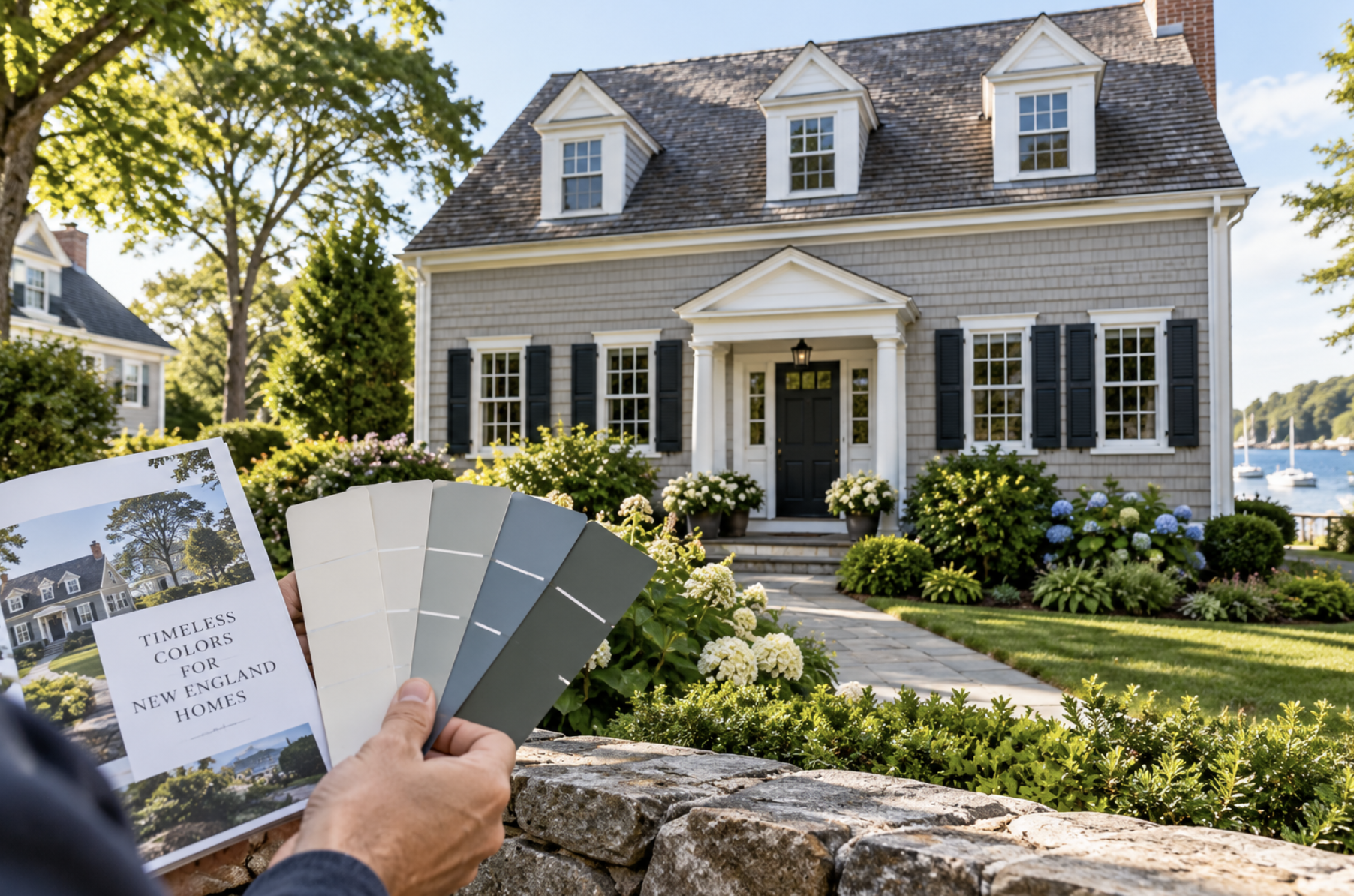
A paint chip is a starting point, not a final answer.
Exterior colors can look dramatically different when viewed across a large surface in natural light.
Before committing, evaluate samples on the actual home.
View them:
- In morning light
- Around midday
- In late-afternoon light
- On sunny days
- In overcast conditions if possible
Also compare the samples directly with roofing, masonry, and trim.
Remember That Outdoor Light Is Powerful
Bright natural light can make exterior colors appear different from how they looked inside a store or on a screen.
Undertones may become more noticeable once a color covers a large exterior surface.
That is another reason sampling is valuable.
Be Careful With Trends
There's nothing wrong with drawing inspiration from current color trends.
But exterior paint typically remains in place for years, while trends can change quickly.
Consider whether the color complements the home's architecture and permanent features even after the trend passes.
Historic Inspiration vs. Historic Requirements
Traditional New England color palettes can provide excellent inspiration.
However, if your property is subject to historic-district or other exterior requirements, verify the applicable rules rather than assuming a historically inspired color automatically complies.
Narrow It Down Before You Commit
You don't need to choose from thousands of colors at once.
Start by identifying:
- Warm vs. cool direction
- Light vs. dark preference
- Existing permanent colors
- Desired trim contrast
- Accent preferences
From there, compare a smaller group of realistic options on the house itself.
Planning an Exterior Refresh?
Minute Men Painters can help you consider the practical side of exterior color selection while planning your exterior painting project.
Planning a Painting Project?
Tell us about your painting project and request a free, no-obligation estimate.