Residential vs. Commercial Painting: What's the Difference?
Residential and commercial painting share the same fundamentals, but scheduling, surfaces, access, coatings, and project planning can differ significantly.
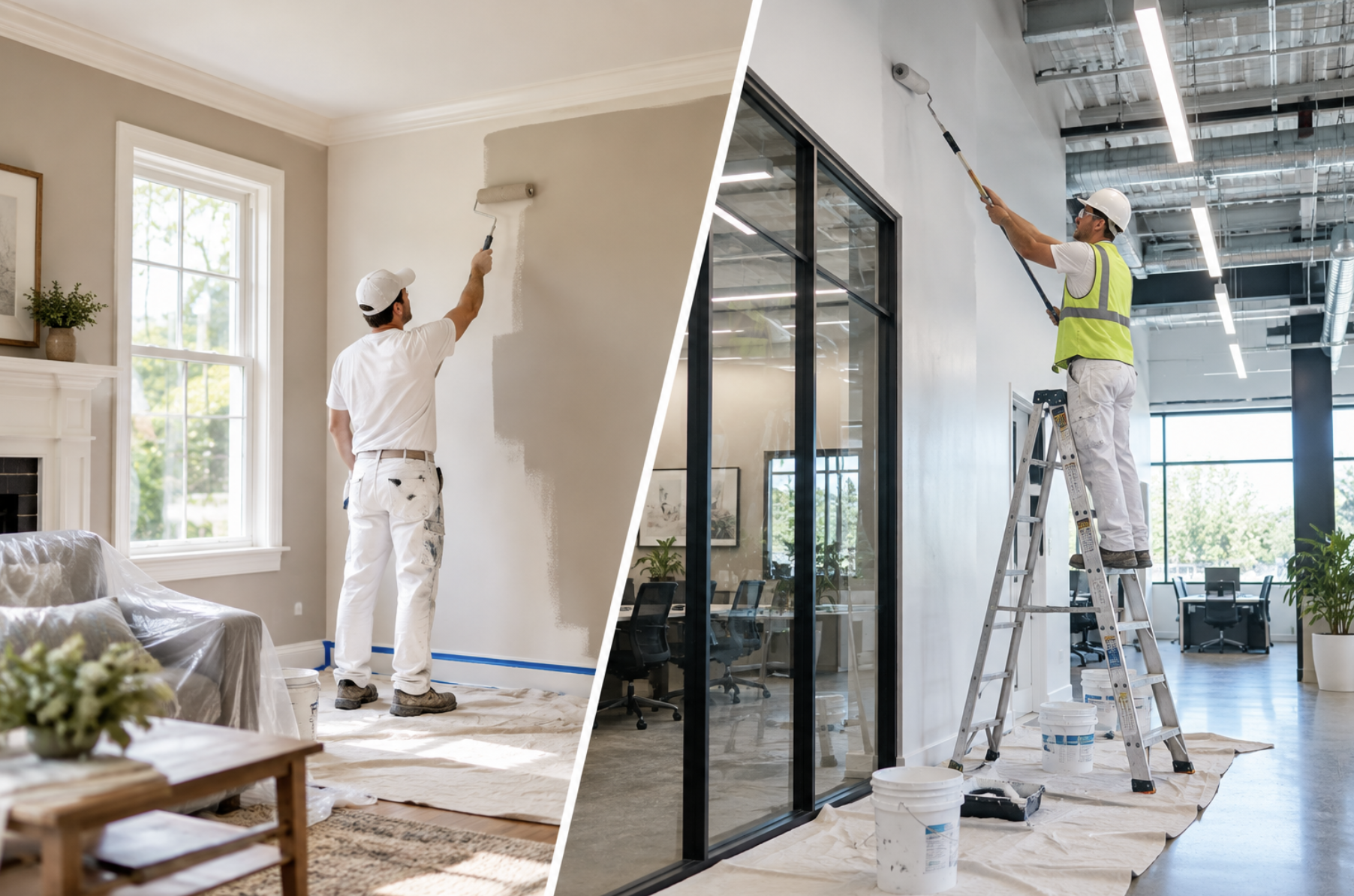
At a basic level, residential and commercial painting have the same goal: properly prepare a surface and apply an appropriate coating.
The way a project is planned and executed, however, can be very different.
Commercial projects often introduce considerations such as business operations, larger spaces, scheduling constraints, different substrates, and increased coordination.
Project Scale
Residential painting may involve anything from a single room to an entire home's interior or exterior.
Commercial work can range from a small office or storefront to substantially larger spaces.
Scale can affect:
- Crew planning
- Equipment
- Material quantities
- Scheduling
- Access
- Project sequencing
But size alone doesn't determine whether a project is complex.
Scheduling Around Occupied Spaces
Residential projects often need to work around a family's daily routine.
Commercial painting may need to account for:
- Employees
- Customers
- Tenants
- Business hours
- Deliveries
- Access requirements
- Other contractors
The painting plan may need to be divided into stages so portions of the property remain usable.
Surface Types
Homes commonly include drywall, plaster, wood trim, siding, doors, and cabinetry.
Commercial properties may include many of those same surfaces along with other building materials and finishes.
The correct preparation and coating system depends on the actual substrate rather than simply whether the building is residential or commercial.
Coating Selection
A quiet residential bedroom and a busy commercial hallway don't necessarily place the same demands on a coating.
Commercial environments may prioritize characteristics such as:
- Durability
- Washability
- Frequent maintenance
- Resistance to repeated contact
Residential projects may place greater emphasis on the exact appearance, color, and relationship between finishes throughout the home.
Those priorities can overlap.
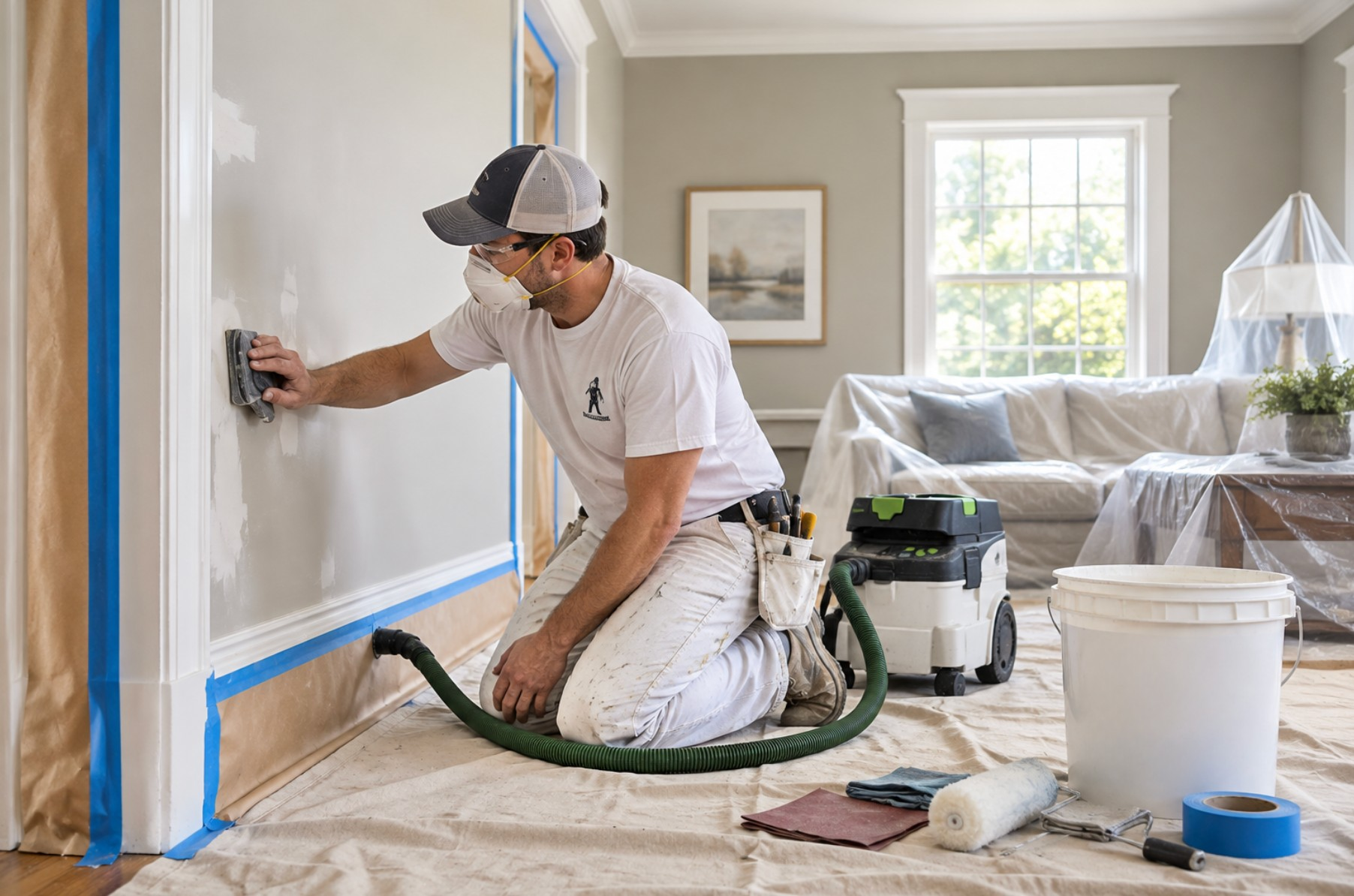
Preparation Still Matters
Whether the project is a living room or a commercial workspace, the new coating depends on the condition of the surface underneath it.
Preparation may include:
- Cleaning
- Scraping
- Sanding
- Patching
- Caulking
- Priming
- Masking and protection
The actual steps should be determined by the substrate and existing condition.
Access and Equipment
Commercial properties may involve tall walls, open ceilings, stairwells, large exterior elevations, or other areas requiring additional access planning.
Residential properties can present their own access challenges, particularly multi-story exteriors.
Equipment requirements should be considered during project planning rather than improvised after work begins.
Communication and Coordination
Communication is important on every painting project.
Commercial work may involve coordination with:
- Property owners
- Managers
- Employees
- Tenants
- Other trades
Residential work typically involves close communication with the homeowner regarding access, room sequencing, colors, finishes, and daily project progress.
Phased Commercial Painting
Some commercial projects can be divided into sections to reduce disruption.
For example, one portion of a property may be completed before work moves to another area.
Whether phasing makes sense depends on the building and business operations.
Residential Painting Is Highly Personal
A home is a personal environment.
Color, finish, trim details, cabinetry, furniture, lighting, and existing design all influence the final result.
Residential painting therefore often involves detailed aesthetic decisions in addition to technical surface preparation.
What Both Types of Painting Have in Common
The fundamentals remain important in both environments:
- Appropriate preparation
- Correct products for the surfaces
- Clean application
- Protection of surrounding areas
- Clear project planning
- Attention to the finished appearance
A commercial project isn't simply a bigger residential job, and a residential project isn't automatically less demanding.
Each should be planned around the actual property and its use.
Residential or Commercial Project?
Minute Men Painters works with commercial painting and residential clients, including interior painting and exterior painting. If you're planning a project, contact the team to discuss the property, surfaces, scheduling needs, and scope of work.
Planning a Painting Project?
Tell us about your painting project and request a free, no-obligation estimate.